
What is the electrification of end uses and why is it central to the energy transition?
Electric vehicles, heat pumps, and electrified industrial processes are making electricity an increasingly important part of our everyday lives. This transformation, known as the electrification of end uses, helps reduce greenhouse gas emissions and dependence on fossil fuels. It also requires enough low-carbon electricity to meet growing demand.
At a glance
• The electrification of end uses replaces equipment powered by fossil fuels with electric alternatives.
• It primarily affects transport, building heating, industry and some service activities.
• It helps reduce greenhouse gas emissions and dependence on imported fossil fuels.
• It leads to increased demand for electricity.
• To support this transition, France plans to rely on a mix of nuclear and renewable energies.
Electrify to reduce dependence on fossil fuels
The electrification of end uses refers to replacing equipment or processes that run directly on fossil fuels — oil, natural gas or fuel oil — with electric alternatives.
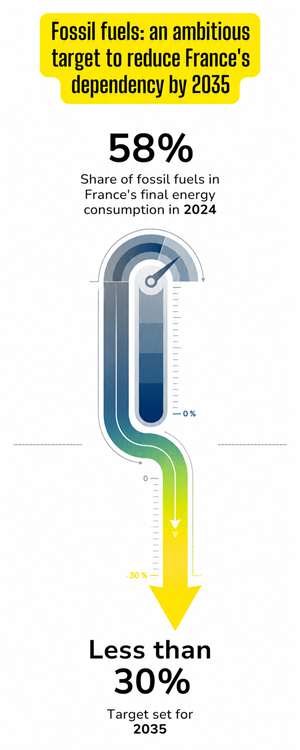
This transformation is one of the key drivers of the energy transition. In France, fossil fuels still accounted for around 58% of final energy consumption in France in 2024, compared to 27% for electricity (Source in french only : 20260423_DP_PLanElectrification.pdf.Yet most of the oil and gas that France consumes is imported.
Electrifying transport, heating or certain industrial processes thus has to meet several further challenges:
- The first of these is related to the climate. When electricity is produced from low-carbon sources, it can replace uses which are heavily dependent on fossil fuels and reduce associated greenhouse gas emissions.
- The second is economic. Tensions on global oil and gas markets tend to have a knock-on effect on energy prices, transport costs, household electricity bills and the competitiveness of businesses.
- Finally, electrification is also an important challenge from the point of view of energy independence. Producing more electricity domestically allows France to limit its dependence on fossil fuel imports and have greater control over the country's energy supply.
The sectors most affected by electrification
Electrification affects far more than a single sector. It is gradually transforming transport, how we heat buildings and a wide range of industrial processes.
Mobility
In transport, electrification is driven primarily by the growing adoption of electric vehicles, replacing petrol- and diesel-powered vehicles.
This requires the rollout of suitable vehicles, charging infrastructure and electricity networks capable of keeping pace with growing needs. It also raises industrial challenges related to the manufacturing and supply of batteries.
Buildings and homes
In residential and commercial buildings, heat pumps can be used to replace certain gas or fuel oil-based heating systems.
Electrification also extends to water heating and many other everyday appliances and systems. However, this transition must go hand in hand with improvements in building energy efficiency to help limit electricity consumption.
Businesses and local services
Businesses, tradespeople and local service providers can also replace equipment powered by fossil fuels with electric alternatives.
The equipment involved varies by sector, from building heating and company vehicles to furnaces, machinery and production equipment.
Industry
In industry, electrification focuses on
processes that can be converted to electricity, including heat production,
equipment operation and certain manufacturing processes.
Not all industrial processes can be
electrified in the same way. Their transformation depends on the technologies
available and the specific requirements of each industry.
Batteries: why have they become strategic?
The electrification of end-use consumption is not just about producing more electricity. It also requires the ability to store electricity and use it when needed. Batteries play a central role in this shift, in particular for electric vehicles. Battery manufacturing has become a major industrial challenge in Europe, which is seeking to secure its supplies of raw materials and develop a local production chain.
Electricity demand is set to grow
The electrification of transport, buildings and industry inevitably leads to higher electricity demand. As combustion-engine vehicles, fossil fuel boilers and certain industrial processes are replaced by electric alternatives, an increasing share of energy demand shifts to the electricity system.. The effect of these transformations is going to be compounded by new uses related to the development of digital technologies, data centers and artificial intelligence. They are also contributing to rising global electricity demand, without being directly related to the electrification of fossil fuel-based end uses. This growth thus depends not only on the number of electric vehicles or heat pumps. Meeting this growing demand therefore requires simultaneous investment in generation capacity, electricity networks and the resources needed to balance supply and demand at all times.
France's roadmap for electrification
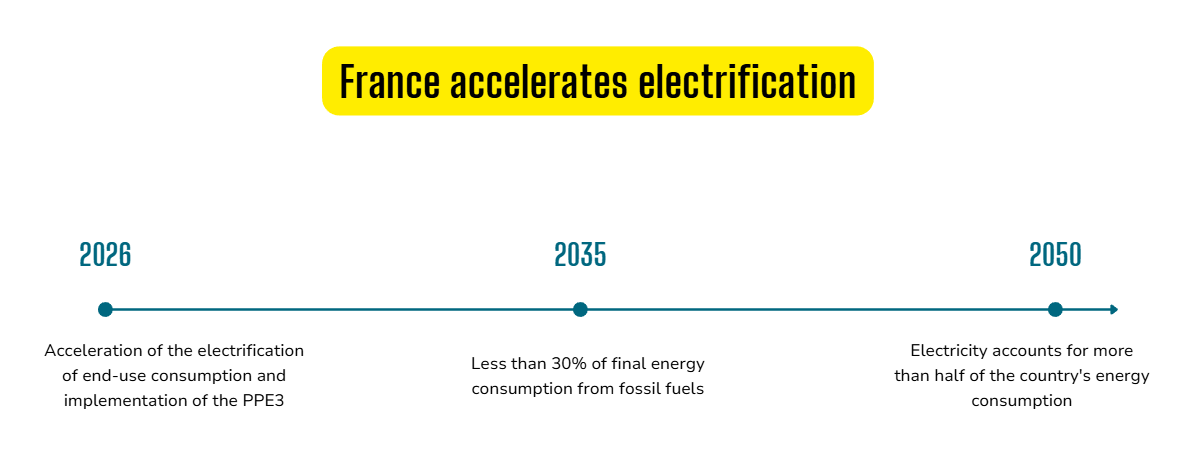
Published in February 2026, France's third Multiannual Energy Programme (PPE3) sets out the main guidelines for France's energy policy for the years to come.
It envisages electricity demand of 618 TWh in 2035, compared to 458 TWh in 2023. It also aims to reduce the share of fossil fuels in final energy consumption from around 60% in 2023 to 40 % in 2030, then to 30 % in 2035.
Building on the PPE3, the French government unveiled a 22-measure electrification plan on April 23, 2026. It focuses in particular on transport, buildings, industry and services.
Public support for electrification is set to rise to 10 billion euros a year by 2030, compared to 5.5 billion euros in 2026.
See also : Nuclear energy - An asset for France’s energy independence
In addition, the PPE3 sets a target of 380 to 420 TWh of nuclear generation by 2030, and envisages the construction of six EPR2 reactors on the Penly, Gravelines and Bugey sites.
Sources : France's third Multiannual energy Programme PPE3 troisième Programmation pluriannuelle de l’énergie - French government press kit dated April23, 2026 dossier de presse gouvernemental du 23 avril 2026 consacré au plan d’électrificationNuclear at the heart of the electrification of end uses
To meet growing needs, it is necessary to have the capacity to produce enough low-carbon electricity. In France, this trajectory relies on the joint development of nuclear and renewable energies.
Nuclear power generates electricity regardless of weather conditions and throughout the year. This characteristic helps to meet the needs of a system in which electric vehicles have to be recharged, heat pumps work harder in winter and certain industrial activities require a continuous supply of electricity.
See also: The benefits of nuclear energy
Nuclear energy therefore complements renewable energy within the electricity mix. In its presentation of the April 2026 electrification plan, the French government underlines that the robustness of France's nuclear fleet and the development of renewable energies provide the foundation for accelerating the electrification of end uses today.
In addition to its role in the generation of electricity, another feature that sets nuclear apart is the ability to recycle part of the materials used. In France, up to 25% of nuclear electricity is produced using recycled materials.
Did you know?
One gram of recycled plutonium or 100 grams of recycled uranium can produce as much energy as one metric ton of oil.
Electrification: three key challenges
- The electrification of end uses is the gradual replacement of equipment powered by oil, natural gas or fuel oil with electric alternatives. The sectors concerned are mainly transport, buildings, businesses and industry.
- This transformation helps to reduce greenhouse gas emissions and dependence on imported fossil fuels. It nevertheless results in a lasting increase in demand for electricity.
- To support this change, France plans to rely on an electricity mix of nuclear and renewable energies. The challenge is therefore not only to electrify more end uses, but also to ensure sufficient low-carbon electricity generation to meet growing demand.
- Comprendre l'énergie nucléaire Nuclear energy makes it possible to produce low-carbon, competitive, and continuous electricity
- All about plutonium A hard, white metal resembling iron, plutonium is a chemical element inextricably associated with nuclear science and technology: find out how it is used.
- Dans le nucléaire, la sécurité au travail est une priorité Laurence Gazagnes and Mounir Boukil discuss the risks inherent in plant operation and maintenance. With results to back up their points of view!