
Purpose and commitments
Through its business, Orano intends to contribute to the fight against global warming by improving access to competitive, low-carbon electricity for all, to the preservation of resources through recycling and to health through nuclear medicine, notably in the fight against cancer. These major challenges of our century are central to our purpose and strategic vision.
#{name}
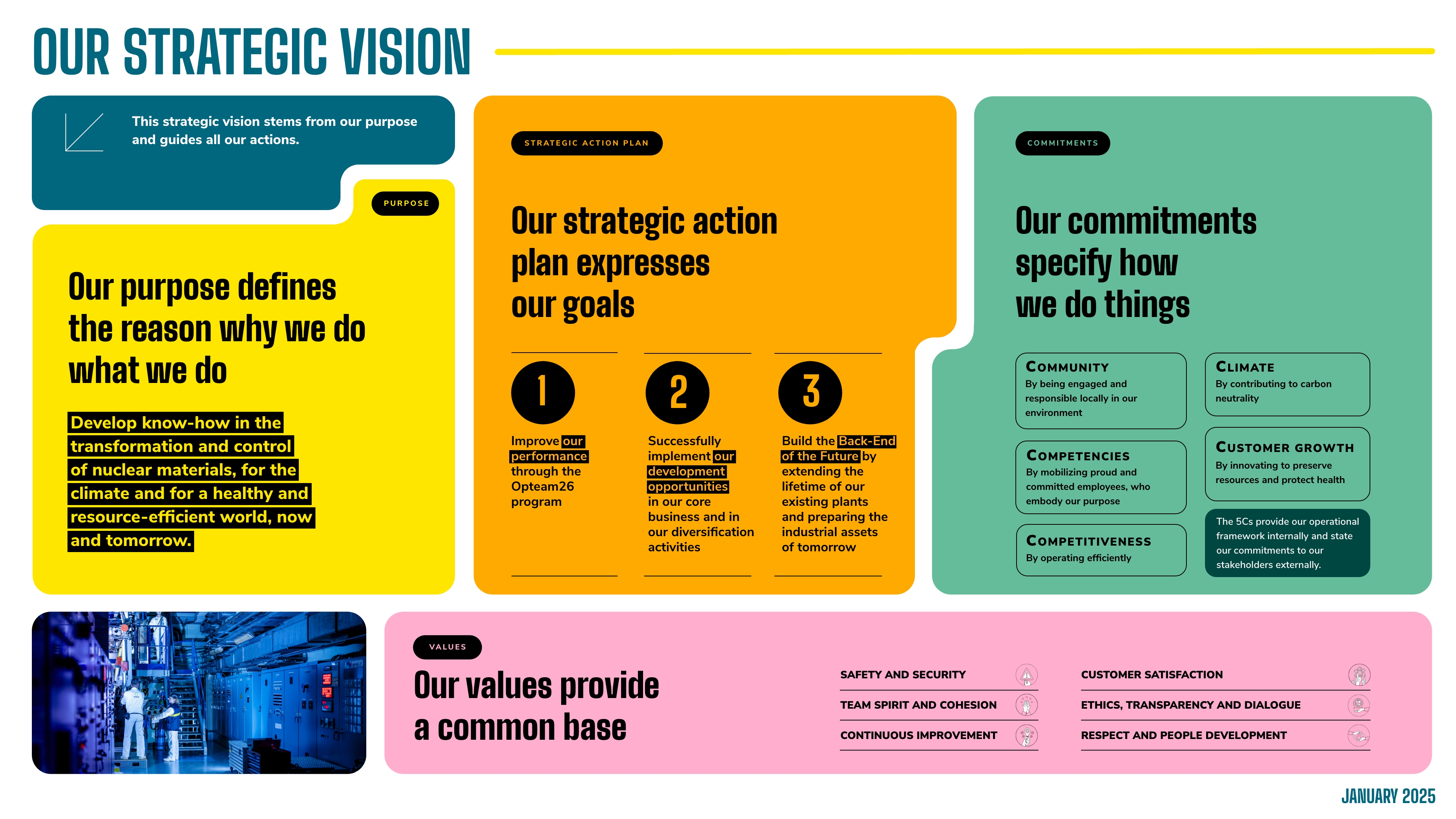
Since 2020, Orano has been driven by its corporate purpose co-constructed with its employees and enshrined in the company by-laws.
"Develop know-how in the transformation and control of nuclear materials for the climate, for a healthy and resource-efficient world, now and tomorrow"
A committed actor providing solutions for tomorrow's world
Our purpose defines who we are, in line with the concerns of our current and future society. It commits us to playing an active role and providing solutions to overcome challenges, whether these are related to the climate, energy or society, and enables the Group to look to the future with ambitious objectives.
Purpose film
Expert Voices - Corporate purpose: give meaning to our activities
#{name}
Our commitments are proof of our determination, to act for a better society.
To continue working towards a socially responsible energy transition, Orano renewed its 2030 roadmap at the end of 2024.
Community
Be engaged and responsible locally in our environment
Relationships with our stakeholders are all the more important as our activities extend over the very long term, for several decades. Orano aims to be a committed and responsible actor in the regions and communities in which it operates, as much for the preservation of their environment as for their development.

Our 2025 results
- 0 INES level 2 events, 1 INES level 1 events and 150 INES level 0 events
- Employee accident frequency rate with lost time of 1
- 81% of progress of our Nature strategy, including a reduction of 47 % of our water consumption compared to 2019
- Around 10 million euros invested in community projects by Orano Mining in 2025
Our 2030 targets
- Assure the safety of our activities by ensuring there are no level 2 INES events
- Seek to achieve a frequency rate of consistently less than 1 (including external contractors)
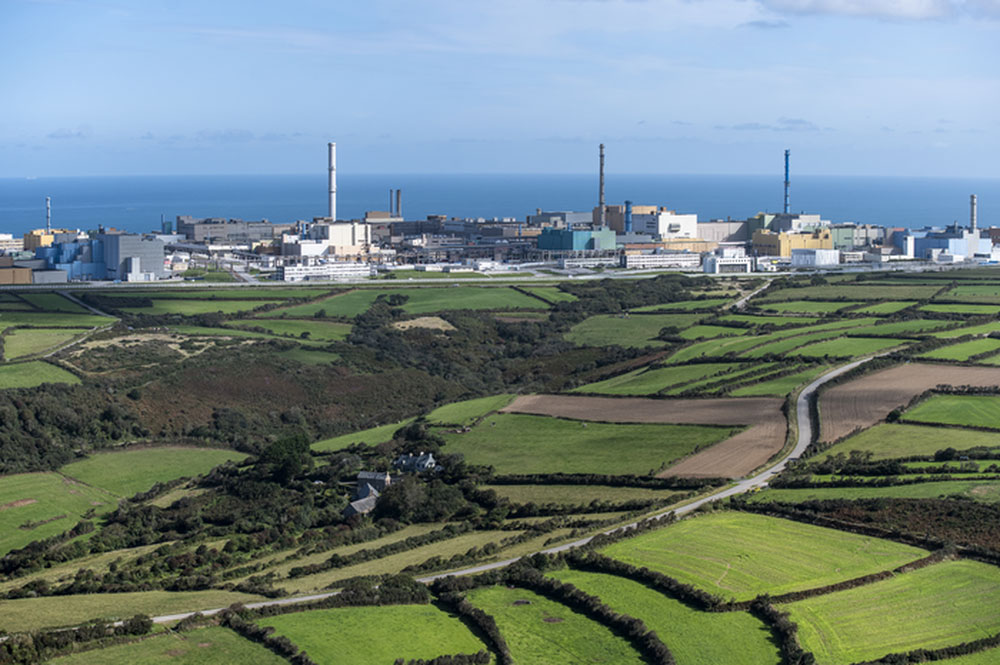
- Complete 2 emblematic remediation operations (deconstruction of the GB1 cooling towers at Orano Tricastin and end of the cleanup of the Parc aux Ajoncs (PAA) at Orano la Hague)
- Deploy 100% of actions of the Nature strategy
- Co-construct our new facilities in partnership with local and regional authorities
Water preservation
The actions implemented in recent years to preserve water are structured around the following key areas:
- Improving the instrumentation of industrial and potable water networks, along with the gradual implementation of consumption monitoring. These measures help to quickly repair leaking networks and limit overconsumption;
- Multi-year renovation of the water networks;
- Optimizing water use in industrial processes;
- Improving water recycling (wash water, condensate, industrial water); and
- Harvesting rainwater.
End of deconstruction of the George Besse I cooling towers
In April 2025, Orano began work to decommission the two cooling towers at the Tricastin site. This deconstruction, scheduled to take 18 months, is a symbol in the decommissioning project of the former Georges Besse gas diffusion enrichment plant, which was shut down in 2012.
In 2025, the deconstruction of the first 123-meter-high tower was completed using a technique known as “nibbling” which deconstructs the structure piece by piece from top to bottom using a “concrete clamp” erected inside the tower. The deconstruction of the second tower will be completed in 2026.
Climate
Contribute to carbon neutrality
It is the world's number one environmental challenge. In addition to being convinced of the role that nuclear energy can play in the energy transition to low-carbon electricity, since 2004 Orano has been running a program to reduce its own emissions with a view to contributing to the collective effort.
Our 2025 results
- Direct and Indirect GHG emissions (Scopes 1 and 2) of 225 456 tCO2e, reaching a 41 % reduction since 2019, thanks to energy performance actions, bringing the total reduction to –80% since 2004.
- GHG emissions of our value chain (scope 3) evaluated at 1 425 880 tCO2e , thus 87% of our total footprint
- 49 emissive suppliers committed to reduce their own carbon footprint
- 83% of industrial operations have a local climate change adaptation plan
Our 2030 targets
- Implement a climate adaptation plan for 100% of Orano's industrial activities
- Maintain -25% on scope 1 and 2 market-based GHG emissions in 2030 vs 2019
- Bring the 80 most emitting suppliers on board in the reduction of their emissions

Greenhouse gas emission scopes (GHG protocol definition)
Scope 1: Direct emissions resulting from the combustion of fossil fuels (gas, oil, coal), direct emissions of refrigerant gases, and direct CO2 emissions not involving combustion
Scope 2: Indirect emissions related to consumption of electricity, heat, or steam necessary for industrial activities. The GHG Protocol requires the calculation of two types of Scope 2 emissions: one based on the average emission factors of the electricity grid mix (known as "location-based"), and the other taking into account the company’s contractual energy sourcing choices (known as "market-based").
Scope 3: Emissions other than those described above
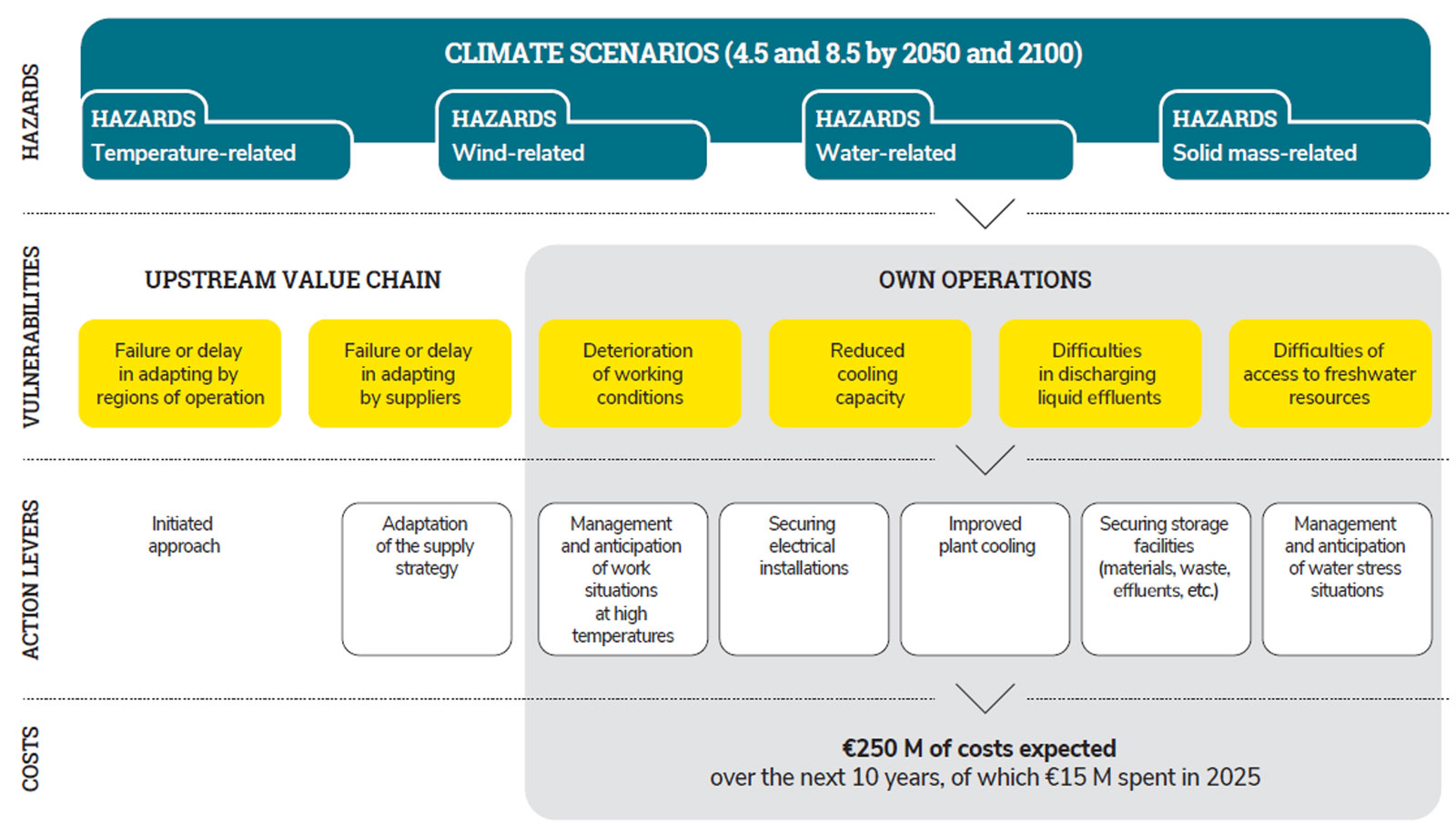
DARWIN, An approach dedicated to the adaptation of industrial operations
A multi-year work program, DARWIN aims to be the common thread of the actions carried out in each of the group’s entities. It also provides a methodological framework for the entities concerned and a control and consolidation organization by the group. It mobilizes and federates initiatives on this subject, and shares knowledge and experience between group entities.
Skills
Mobilize proud and committed employees, who embody our purpose
The realization of our policy of commitment will be driven by the women and men of Orano. The Group's goal is to develop the skills needed today and tomorrow in an attractive, inclusive and innovative environment.

Our 2025 results
- 7 training schools: the École des Métiers, the Management Institute, the Mining College and Trihom, and 3 Ecole des Métiers of la Hague, Tricastin and Melox
- An average of 35 hours of training per employee per year worldwide.
- Around 2050 personnel recruited on a permanent basis in 2024
- 32% of women in Management Committees worldwide
- 2nd place in the HappyIndex®Trainees France 2025 ranking
 On
May 21, 2025, Orano obtained the renewal of its label for the period 2025–2029. Issued following a rigorous audit, this national label validates the quality of our actions in terms of preventing discrimination, promoting diversity and compliance
with the 26 legal criteria.
On
May 21, 2025, Orano obtained the renewal of its label for the period 2025–2029. Issued following a rigorous audit, this national label validates the quality of our actions in terms of preventing discrimination, promoting diversity and compliance
with the 26 legal criteria.Our 2030 targets
- 35% women on Management committees (worldwide)
- Employee Engagement rate of 70%
- Maintain an average of 35 hrs of training per employee per year (worldwide)
- 100% of employees covered by a common base in terms of social benefits
-
Orano JobsDiscover
Working with Cancer
At a time when cancer is an ever-present reality in our personal and professional environment, the group has decided to take steps to support its employees in the workplace, in order to improve monitoring, encourage the adoption of health-promoting behaviors and improve support for employees diagnosed with cancer. As such, Orano signed the charter Working with Cancer (WWC) in November 2024.
This signature is part of the group’s desire to roll out support and prevention actions for all employees in the 17 countries where the group operates. As part of this charter, Orano aims to strengthen its prevention and support measures for employees facing cancer.
Customer Growth
Innovate to preserve resources and protect health
No company can develop without the trust of its customers. Orano must continue to meet the needs of its customers, present and future, with innovative products and services, while at the same time responding to society's expectations in relation to the environment and health.

Our 2025 results
- Top 3 in our businesses
- Launch of a new industrial pilot to Recycle electric vehicle batteries
- Two cancer treatments in clinical phase: AlphaMedix™ and GRPR.
- 5% progress of deconstruction required by the « Aval du futur » program
- 212 million euros invested in R&D
- 811 recognized experts and specialists
Our 2030 targets
- Commercialize at least one anti-cancer drug
- Launch the execution of « Aval du futur » program
« Aval du futur »
The “Aval du futur” project is in line with the decisions of the Nuclear Policy Council (CPN) of February 26, 2024, which confirmed the national strategy for the treatment-recycling of fuel from current and future nuclear power plants. As one of the group’s strategic priorities for the coming decades, it intends to renew its used fuel treatment and recycling plants by 2040-2050.
-
Consult Aval du futur websiteDiscover
Competitiveness
Operate efficiently
Orano is convinced that there cannot be sustainable economic performance and profitability without a reduction in its environmental footprint.
Our 2025 results
- 116 GWh of identified energy performance projects
- 81% progress of Orano 2024 – 2026 Responsible purchasing policy
- 94 % of purchases by Orano's French entities are made in Europe, and 92% of purchases by foreign entities are made within their respective countries.
- An eco-design program deployed since 2021, applied to 76% of major projects above 20 million euros
-
At Orano, performance has taken the form of a managerial and cultural revolution, serving competitiveness and customer satisfaction.Discover
Our 2030 targets
- Achieve in terms of energy performance the equivalent of 10% of our consumption for 2019 (190 GWh)
- Deploy 100% of the actions set out in our Responsible Purchasing policy
- Adopt an ecodesign approach on 100% of our large projects costing more than € 20 M

Formalized Responsible Purchasing Policy
- Choosing partners who are committed to their employee’s fundamental rights, health and safety
- Reducing the environmental impact of the group’s purchases;
- Building balanced and virtuous relationships with the group’s partners promoting diversity and inclusion and contributing to the development of SMEs; and
- Contributing to the development of the industrial sector as well as the economies of the areas in which the group is active.
Orano has obtained beginning of 2026 the french « Relations fournisseurs et achats responsables » label.
#{name}

Within the Orano group, each one of us shares common values which drive our actions and behaviours at every level and in every activity:
- Safety-security: no compromises, we aim for the highest standards
- Customer satisfaction: attentiveness, pragmatism, anticipation, responsiveness, proactiveness
- Continuous improvement: delegating, the right to make mistakes, initiative, creativity, performance targets, outward-looking attitude, taking on challenges
- Respect and people development: attentiveness, high standards, benevolence, respecting differences, professional and personal development
- Team spirit and cohesion: cooperation, transparency, problem-solving, teamwork
- Ethics, transparency and dialogue: information-sharing and dialogue with our internal and external stakeholders, respect for the law, company rules and employee rights, exemplarity, integrity.
Safety and security, foundational pillars for Orano
The safety of our facilities and that of our employees and external companies is an absolute priority, just like environmental protection. This requires us to show unwavering commitment to nuclear safety, occupational health and safety, and radiation protection.
The priorities set by the 3 renewed policies for the period 2024 – 2026
- The HSE Policy sets 4 priorities:
- Anchor a strong leadership culture
- Building a sustainable future
- Contribute to performance by controlling our risks
- Move towards a homogeneous level of prevention and requirements
- Anchor a strong leadership culture
- The Quality Policy sets out 3:
- Learn from our feedback to strengthen our Quality culture and improve performance
- Be committed to the satisfaction of our customers in terms of quality-cost-time performance and without compromising with nuclear safety
- Bring together the interests of Orano and those of its suppliers to ensure control of our supplies and subcontractors
- Learn from our feedback to strengthen our Quality culture and improve performance
Finally, the Protection Policy sets out the main principles for the protection of activities and materials, people during their travels and the protection of heritage.
Ethics, compliance and vigilance
Orano strives to be exemplary in terms of ethics and compliance. As a responsible company, Orano acts in accordance with two priority principles:
- compliance with the most stringent requirements proportionate to the nuclear and conventional safety issues in the conduct of our business, and for the protection of health and the environment;
- compliance with the strictest integrity standards and unswerving commitment to the fight against bribery, fraud, and anticompetitive practices.
Ethics Code
This sets out the principles and the associated rules of conduct required to uphold Orano's priorities, values and reputation. It applies to subcontractors and suppliers, which must sign a specific sustainable development commitment. This has been renewed in 2024 to strengthen environmental expectations.
-
Ethics CodeDiscover
In 2024, the group adopts a Human Rights policy
In 2024, the group adopted a Human Rights policy which was validated by the Executive Committee. The result of close collaboration between the various departments, it will be gradually rolled out across all group entities and included in the documents provided to suppliers and subcontractors. It expresses Orano’s desire to conduct its activities in strict compliance with internationally recognized human rights and to demand respect for these rights in its business relationships.In principle, the Human Rights policy defines the group’s commitments to respecting the fundamental rights and individual freedoms of its employees, applying the highest standards of safety, security and health, managing resources responsibly and preventing any negative impact its activities may have on the rights of local communities living near its sites.
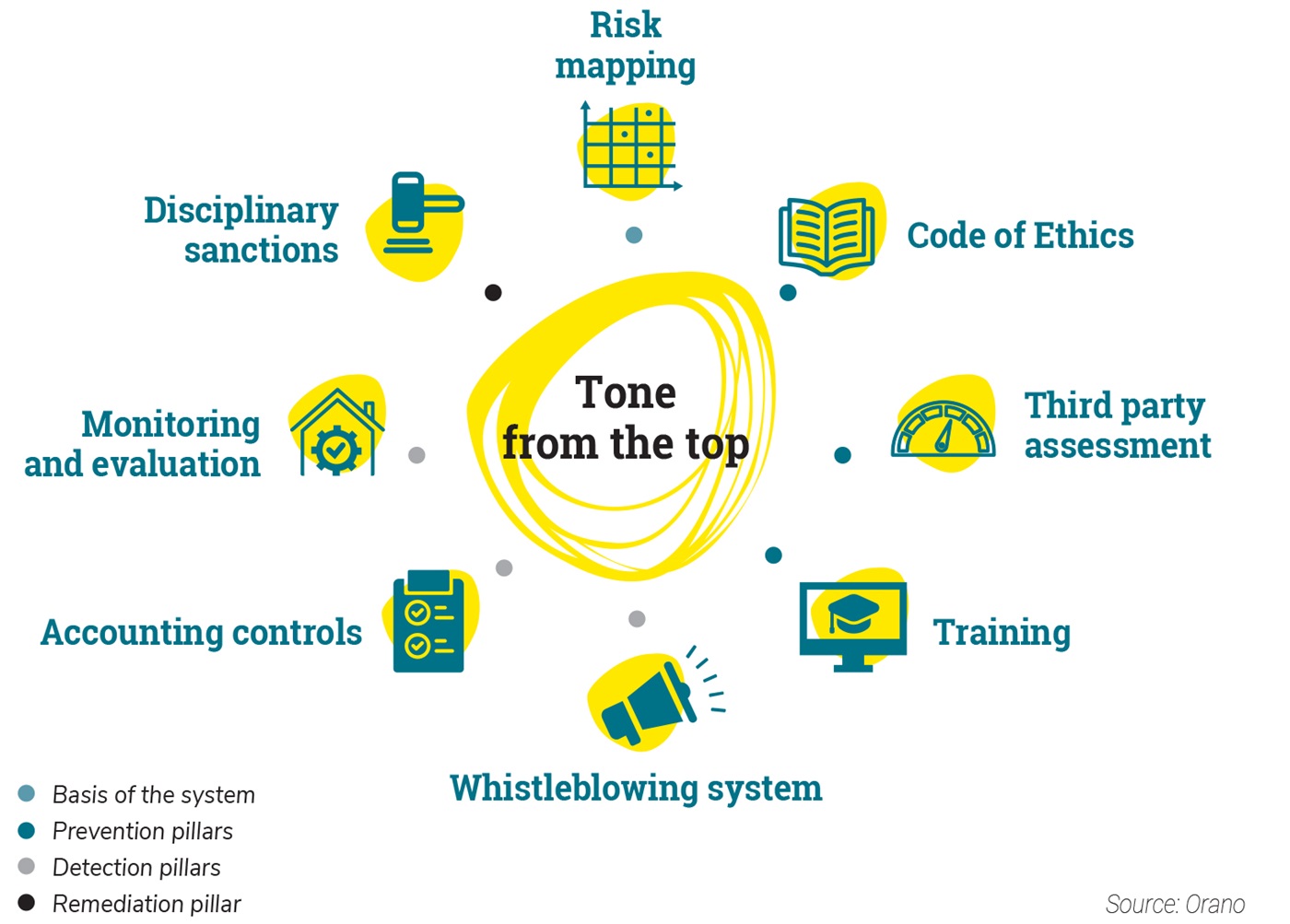
Orano implements and deploys an anticorruption compliance program within the Group, which is regularly updated. It promotes a culture of business ethics and transparency through a preventive approach, based on strict rules of conduct, and training and awareness actions.
PROGRAM TO PREVENT AND DETECT ACTS OF CORRUPTION
Our 2025 results
- 81 % of employees trained in compliance in 2024
- 159 ethical incidents collected and analyzed through the ethical report process
The Orano group's whistleblowing platform is open to all its employees, as well as to its business partners and recruitment candidates, in all countries where the Group operates, with the exception of the United States,
which has a specific local system. Details of how the alert system works are available on the whistleblowing platform itself: https://oranoethic.signalement.net/entreprises
A committee at the service of Vigilance
The close collaboration between the teams was confirmed by the creation in 2023 of a Vigilance Committee composed of representatives of the Health-Safety-Environment, Risks-Compliance-Internal Audit and Purchasing departments and led by the Legal Department. This committee also defines annual action plans and participates in the development of the vigilance culture within the group.
-
Orano - Duty of care planDiscover
Transparency and dialogue
In order to report on our activities in a reliable, regular way, and foster relations with various audiences and institutions, Orano is part of a multi-faceted information system:
Annual information reports
- In accordance with the provisions of Article L. 125-15 of the French Environmental Code, each Orano group industrial site publishes an annual report informing the public about its activities in terms of safety, security and radiation protection, as well as the results of its environmental measurement campaigns and waste management.
- The Group also publishes a report for the French High Committee for Transparency and Information on Nuclear Security (HCTISN), and the French national plan for the management of radioactive materials and radioactive waste ( PNGMDR) under the aegis of the French Ministry for the Ecological and Inclusive Transition, and the ASN. All these reports are available on multiple distribution channels and can be downloaded from our website under "Reference publications".
Local information committees, public meetings and visits
- Within the framework of the local information committees (created in 1981), the Group participates in information meetings on its activities, notably alongside elected representatives, associations and members of the safety authorities, with media representatives also present.
- For their part, the mining businesses and ICPE-classified activities (the Malvési site in particular) participate under the authority of the prefects in meetings of the monitoring and surveillance committees (CSS).
- Each year, facility tours are held to give visitors the chance to learn about our plants, how they work, and our activities. Local events such as public sessions, and meetings with neighboring residents and the press are also organized.
Stakeholders and public consultation
- Orano has implemented a Stakeholders committee in 2021. This committee is a consultative body composed of a dozen external volunteer personalities. Its mission is an advisory role with the objective of providing the company's management with external views on the group's social, societal and environmental commitments. It meets 2 times a year.
- The group regularly conducts surveys with its partner BVA.
Data sharing
- Orano contributes to the centralized national network managed by the French Nuclear Safety Authority (ASN) and the French Institute for Radiation Protection and Nuclear Safety (IRSN) (www.mesure-radioactivité.fr).
- Orano Mining provides information about the environmental monitoring of its former French mining sites on its CartOMines website.
-
Orano has implemented immersive visits of its main operationsDiscover
Engaged in our ecosystem
Orano is a committed member of professional associations in its field.
#{name}
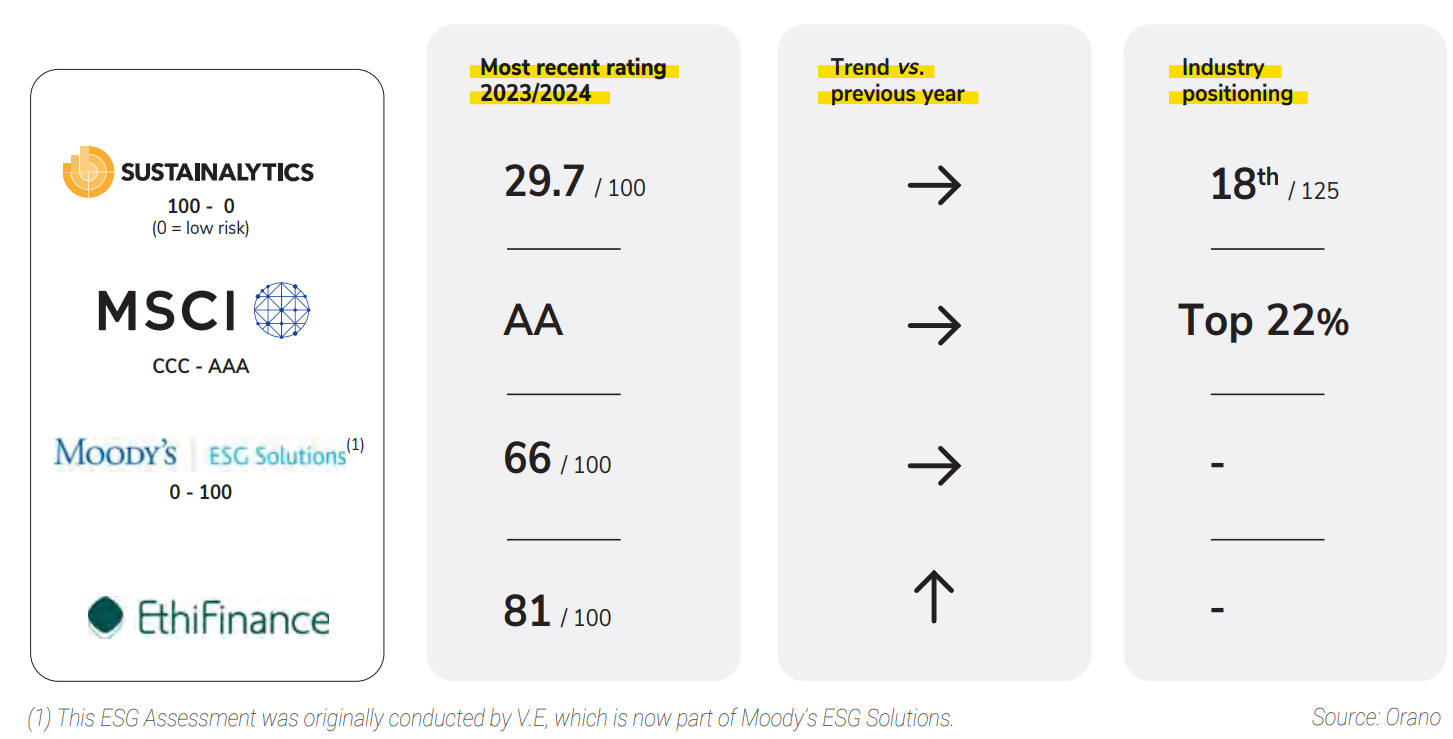
Orano ESG performances have been recognized by several ESG rating agencies which puts the group among the best of its category.
-
Orano group's key figures, its financial and extra-financial indicators 2025Download