
Investigating new methods of mining of uranium deposits: the University of Pau and the Pays de l'Adour, Orano and the French National Research Agency (ANR) are launching the "SATURNE" Industrial Chair
The Orano group, a recognized international operator in the field of nuclear materials, the University of Pau and the Pays de l'Adour (UPPA) and the French National Research Agency (Agence Nationale de la Recherche – ANR) inaugurated the SATURNE* Industrial Chair in Pau (Pyrénées-Atlantiques, France) on November 27, 2025, with the aim of developing innovative methods for the characterization and mining of uranium deposits. In particular, it will be focusing its interest on the extraction of uranium by the process of in-situ recovery, a mining technique that addresses some important environmental challenges.
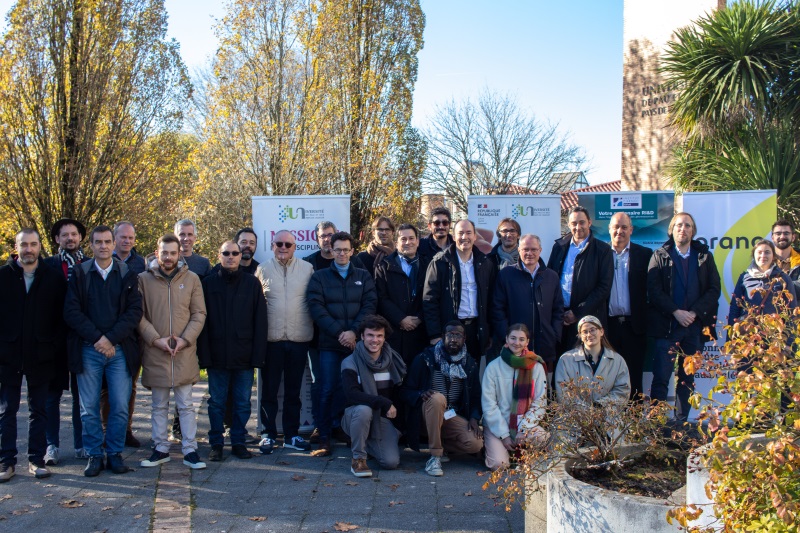
The aim of this Industrial Chair is to address strategic challenges related to the security of supply of uranium, a key resource in the production of low-carbon energy. By bringing together specialists from the public research community and those from Orano, SATURNE aims to make the French nuclear industry more competitive while minimizing its environmental impact. With a view to achieving this, it will receive total funding of 2.3 million euros for a period of four years, co-funded on a 50:50 basis by Orano and the ANR.
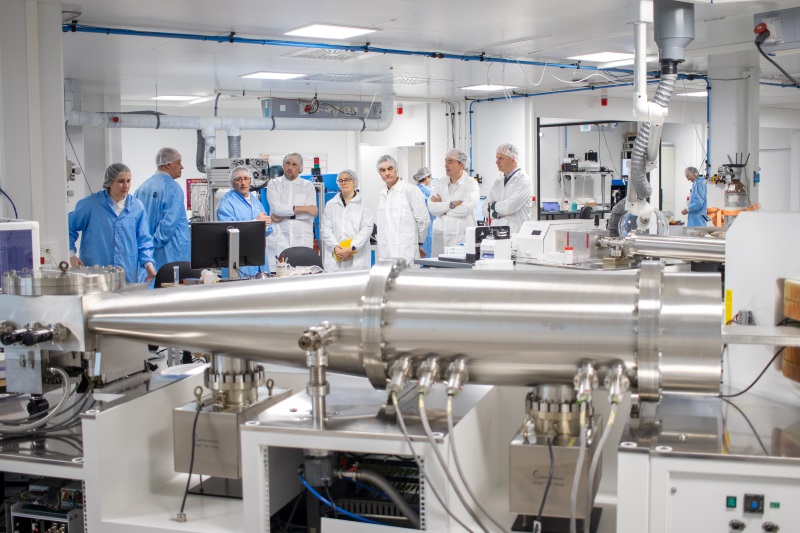
The university, through its Laboratory of Complex Fluids and their Reservoirs (Laboratoire des Fluides Complexes et leurs Réservoirs – LFCR) and its Institute of Analytical Sciences and Physico-Chemistry for Environment and Materials (Institut des Sciences Analytiques et de Physico-Chimie pour l’Environnement et les Matériaux – IPREM), both joint research units with the CNRS, and its Laboratory for applied sciences in mechanics and electrical engineering (laboratoire des Sciences pour l’Ingénieur Appliquées à la Mécanique et au génie Électrique – SIAME), is putting its expertise in the fields of physics and chemistry in the natural environment, as in microtomography and advanced chemical analysis techniques at Orano's disposal.
For its part, Orano is developing new methods aiming to make the mining of geologically more complex deposits viable from an economic and environmental point of view.
The studies carried out as part of the SATURNE project will in particular focus on permeable formations mined by the circulation of solutions, as in the “in-situ recovery”** technique, now used to produce 50 % of the world's uranium in which Orano is one of the leading specialists.
The Industrial Chair, an initiative of Patrice Creux, Full Professor at the LFCR, and Sébastien Hocquet, a geologist at Orano Mining, will encourage the emergence of new topic of research for industrial purposes while supporting the training of your researchers. For four years, 12 PhD students and 6 post-doc students, co-supervised by 14 researchers from UPPA and engineers from Orano, will in this way take part in several applied research projects, with prospects of carrying out missions in the field, in particular in the Athabasca Basin (Canada) and the Gobi Desert (Mongolia).
_________________
** In-Situ Recovery(ISR) technology consists of circulating a leaching solution (term used to refer to a liquid used to extract soluble substances from a material) through the ground which dissolves the uranium present in the sediments. The liquid containing the uranium is pumped out and routed to a processing plant where the uranium is extracted and concentrated. Once stripped of uranium, the solution is reinjected into the wells in this closed-loop process. Where the geological properties of the ground make its use possible, the ISR technology is the best way to mine low-grade deposits.
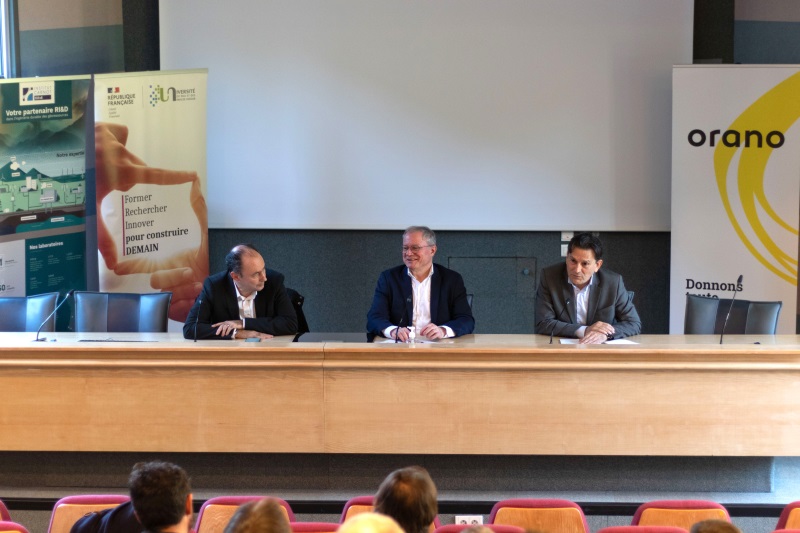
"The ANR's Industrial Chair program has three complementary aims: to conduct and structure ambitious collaborative research projects in strategic areas thanks to solid and lasting public-private partnerships; to provide internationally renowned researchers with the opportunity to conduct innovative research work with high potential for industrial application; and, through research, to train the young scientists who will contribute to the innovations of tomorrow. The SATURNE Industrial Chair is a great illustration of the scheme's ambitions and the ANR is delighted to support this exemplary initiative, which demonstrates the relevance and vitality that research partnerships can bring to facilitating major technological and energy transitions."
Arnaud Torres, French National Research Agency's Director of Research Partnerships
"This specially funded program demonstrates the alliance between academic excellence, technological innovation and industrial commitment to the energy transition and France's energy sovereignty. It is more than a research project, it's a promising and lasting group dynamic collective that is in the process of establishing itself."
Laurent Bordes, President of the University of Pau and the Pays de l'Adour
"It is an enormously exciting opportunity which combines the expertise of the scientific community and that of Orano's operational teams. Together, they should open the way for the discovery of new uranium deposits and innovative extraction methods allowing
difficult deposits to be made viable."
Hervé Toubon, R&D and Innovation Director of Orano Mining
"This collaboration is the continuation of joint research studies which we began work on together two years ago.
The initial results obtained were very encouraging and enabled us to put together an ambitious research program in geosciences and physics-chemistry applied to the extraction of uranium, the ambition of which is to develop new resources. With this large-scale program, we are embarking on an adventure that will be both exciting and demanding."
Sébastien Hocquet, Orano Mining geologist, Joint Manager of the SATURNE chair
Contact
Press Contact French National Research Agency (ANR)
Katel Le Floc'h
+33 (0)6 81 61 12 97