
Project IKE Enrichment

On September 4, 2024, the State of Tennessee and Orano announced the selection of Oak Ridge, Tennessee, as Orano's Preferred Site to construct a multi-billion-dollar, state-of-the-art centrifuge uranium enrichment facility.
Since then, we are steadily progressing through milestones towards bringing a new U.S. enrichment facility online to help meet America’s need for an increased, secure domestic nuclear fuel supply.

Orano is developing the Project IKE uranium enrichment center on a 624-acre former Manhattan Project property in Oak Ridge as a multi-structure, expandable commercial production facility with an initial 4 million separative work units (SWU) capacity coming online in the early 2030s.
Facility operations will create more than 300 new direct jobs in Roane County and new business for an American supply chain based in East Tennessee.
Our focus is to ensure that U.S. nuclear utility customers receive the fuel they need to reliably perform their mission of generating steady and reliable electricity – like TVA. This energy is vitally important to power our daily lives and energize economic development.
Orano's Enrichment Expertise
For more than 40 years, enriched uranium from Orano’s facilities has reliably powered America’s nuclear reactors.
We are now developing a new enrichment facility in Oak Ridge, TN, to ensure a reliable, abundant, and secure domestic supply for the future.
Using proven technology and an American supply chain, we will be ready to power America’s increasing demand for nuclear energy.
Orano has more than 60 years of industrial experience in uranium conversion, chemistry and enrichment and recently modernized its facilities in France for decades more of reliable operations and supply.
Today, Orano provides 12% of global uranium enrichment capacity through its Tricastin fuel enrichment site in France and is expanding that capacity by 30% to help meet global demand.
The Need for Orano's New American Enrichment Facility
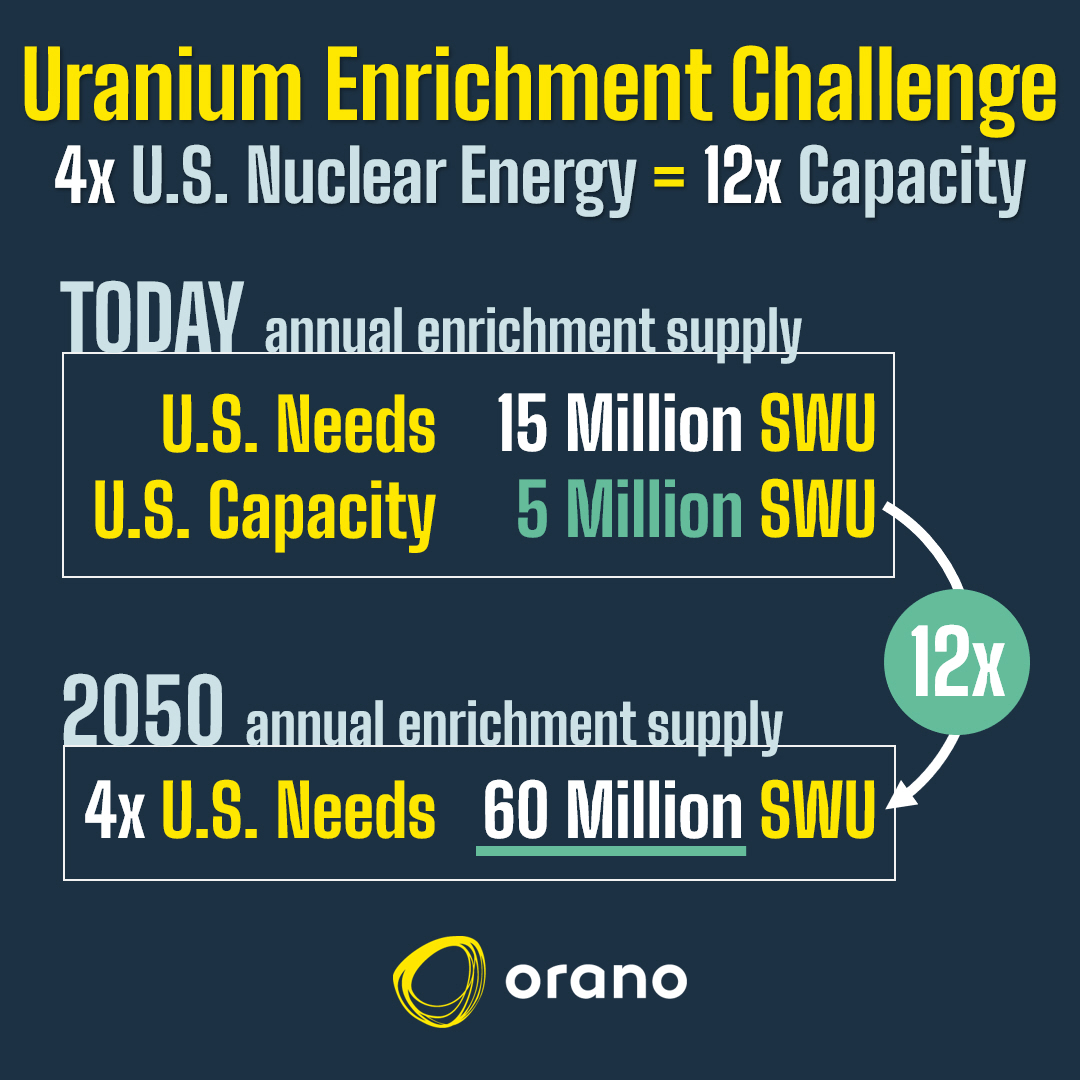
The U.S. has set a goal of a 4x increase of domestic nuclear energy by 2050.
That equals a 12x increase of domestic enrichment capacity!
To achieve this required domestic enrichment output, we need all suppliers running full bore—it's not an either/or.
Our Project IKE enrichment facility planned for Oak Ridge, TN, is designed as a major source for reliable, diversified, domestic capacity.
30 years ago, the United States was the world leader in producing enriched uranium. Today, the U.S. produces only one-third of what it needs.
With the ban on importing the formerly significant supply of Russian enriched uranium, the U.S. needs to quickly ramp up new sources.
A sufficient, reliable, American fuel supply is an increasing national security imperative.
Orano is stepping up to bring our best and to apply our expertise to build a modern American enrichment facility in Oak Ridge, TN.
Proactive funding actions by Congress and the U.S. Department of Energy and clear Customer interest enabled Orano to make the significant decision to pursue an enrichment facility in the U.S.
FAQs
What is happening?
- In September 2024, Orano USA selected Oak Ridge, Tennessee, as the site for developing a multibillion-dollar uranium enrichment facility, termed Project IKE. Key criteria in this decision included the world-class, reliable power supply available from TVA, strong community and state support, remarkable educational systems providing employee pipelines, and available qualified workforce.
- In January 2026, Orano was sole-selected by the Department of Energy to receive a $900 million award to produce a significant and reliable America-based supply of low-enriched uranium to power the nation’s commercial nuclear energy reactors. Orano is using the funding to develop Project IKE.
- In May 2026, the Nuclear Regulatory Commission accepted Orano’s Project IKE facility license submission for review on an accelerated 12-month timeline.
Who is Orano USA?
Orano has operated in the U.S. for 60 years. For more than 40 years, enriched uranium supplied by Orano from its French facilities has reliably powered America’s nuclear reactors. The modern enrichment facility in Tricastin, France, uses efficient gas centrifuge technology. Orano is now building a similar facility in Oak Ridge, Tennessee. With U.S. headquarters in Bethesda, Maryland, and global headquarters in Paris, France, Orano is a leading technology and services provider throughout the nuclear fuel cycle for the commercial and federal nuclear industries. Orano currently provides 12% of global uranium enrichment capacity through its fuel enrichment site in Tricastin.
Why is this enrichment facility development code-named Project IKE?
"Project IKE" relates to President "Ike" Eisenhower and his historic Atoms for Peace speech to the United Nations about using atomic energy for peaceful means and the public good.
What is the NRC’s role, and how is safety rigor achieved during the 12-month license application review?
The Nuclear Regulatory Commission (NRC) is an independent federal agency created to regulate civilian nuclear activities. Its review of Orano’s application will independently provide reasonable assurance that the proposed facility meets federal safety, security, and environmental standards. NRC Chairman Ho K. Nieh has stated that the agency’s goal is "credible, predictable and timely safety reviews" — not a reduced standard. The 12-month timeline was facilitated by more than a year of pre-application meetings between Orano and NRC staff before formal license submission, and NRC’s previous approval of a similar gas centrifuge enrichment facility that Orano had earlier planned to build at another U.S. location.
How would this project benefit the local community?
Building and operating this new facility would create hundreds of jobs, a new supply chain of local vendors and small businesses, expanded tax base, and cooperation with regional technical and education institutions to develop a robust pipeline of skilled and professional workers.
How many jobs will be created?
More than 300 operational jobs would be created at the facility and an expected 1,000 construction jobs during development. For open job postings, see below.
What types of jobs are in an enrichment facility?
The jobs are a mix of professional and skilled workers, including management, engineers, safety professionals, laboratory technicians, training personnel, electricians, maintenance staff, health physics technicians, security force personnel, and transportation specialists.
What does the full project timeline look like from licensing to decommissioning?
The facility is designed for an initial 40-year NRC license with intent of operating for 60 years. Based on the expected schedule, the NRC license application review is targeted for completion by April 2027, construction begins September 2027, ramp-up to initial commercial production begins in 2031/2032, and operations are planned from January 2032 through December 2091.
Enrichment
What does a uranium enrichment facility do?
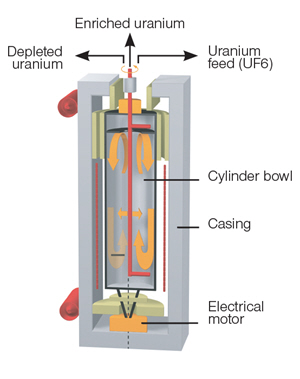
The uranium enrichment process is one of the steps in producing fuel for nuclear energy reactors. The enrichment process uses a very long cascade of centrifuges to increase (enrich) the percentage of uranium-235 in the uranium hexafluoride (UF6) gas as the material passes from one centrifuge to the next. Once the UF6 is enriched to the desired percentage of uranium-235, it is sent to a fuel fabricator to create the specific fuel form for loading into the different types of reactors.
Will the facility produce LEU, LEU+, and HALEU?
Based on customer demand and federal support, this Project IKE facility can be structured for various enrichment levels. The current license design is for low-enriched uranium (LEU+) production up to 10%. Orano was selected in a Department of Energy award announced January 5, 2025, as the sole supplier of low-enriched uranium (LEU) generated by new domestic sources.
For high-assay low-enriched uranium (HALEU) up to 19.75%, Orano was also selected by the DOE for future task orders within the HALEU enrichment and deconversion contracts. With appropriate market demand and federal support, a HALEU facility to enrich uranium for fueling certain advanced reactors could be co-located with the LEU facility on the Project IKE site to achieve cost and process efficiencies. Orano already has licensed HALEU transport systems to securely deliver this fuel to advanced reactor developers.
Is enriched uranium at this facility the same as weapons material? Is there a proliferation risk?
No, this uranium enrichment for commercial nuclear energy is much less than the level required for weapons-grade material. Project IKE is only licensed to produce low enriched uranium (LEU) up to 10% U-235 for commercial nuclear energy reactors. Weapons-grade highly enriched uranium (HEU) requires enrichment to 90% or more. The NRC’s security and safeguards review specifically requires and evaluates physical protection systems, materials accountability, and international safeguards compliance. As an NRC-licensed commercial facility, Project IKE would be regularly inspected by the NRC throughout its operational life.
Facility
How large is the planned facility?
The facility design is for a 750,000 square foot facility, similar to our operating enrichment facility in Tricastin, France. With an initial capacity of 4 million SWU, the Project IKE enrichment facility's license is for a 7 million SWU capacity. For a close look at an operating uranium enrichment facility, go on a virtual tour of Orano's Georges Besse II enrichment facility in Tricastin.
How will the supply chain be developed?
Orano has committed to an extensive American supply chain for constructing the 750,000 square-foot Project IKE facility, manufacturing and installing the extensive material-handling equipment and systems, and supporting the ongoing uranium enrichment operations.
Concept rendering of Orano's Project IKE uranium enrichment facility in Oak Ridge, Tennessee.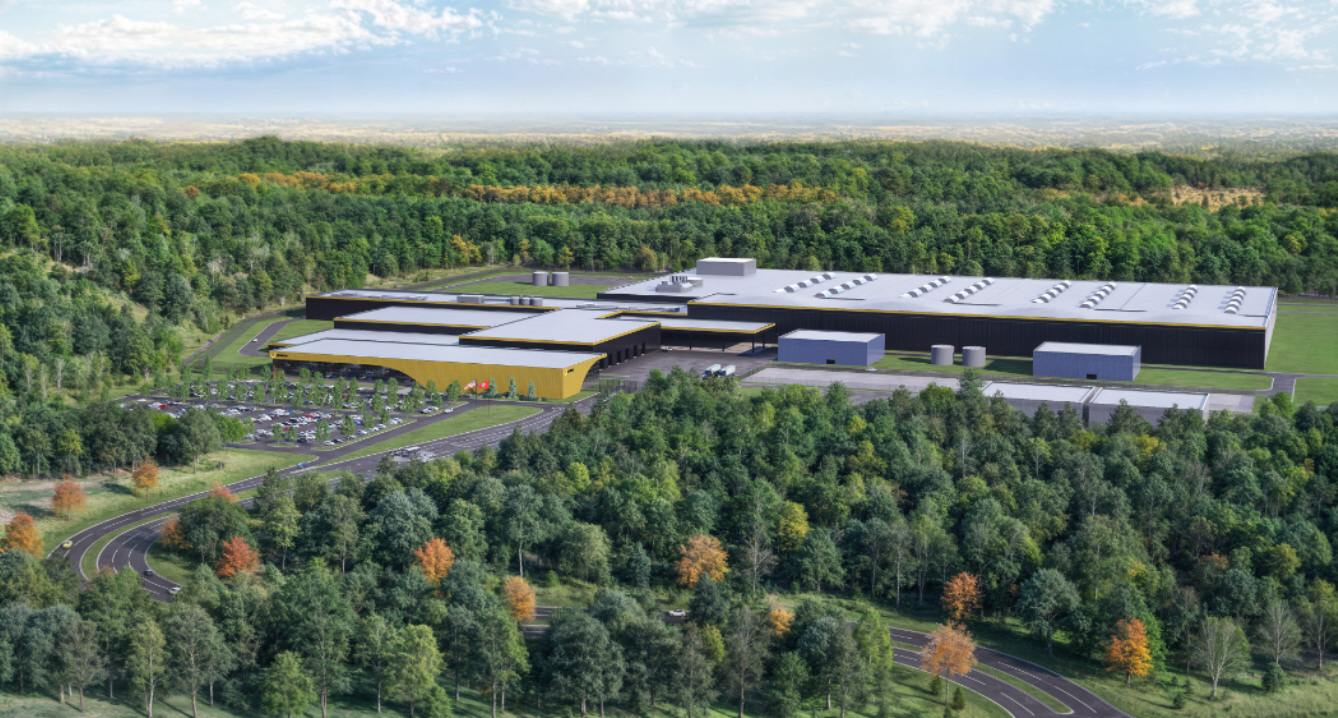
The Site & Construction
Where is the Project IKE site, and what was it used for before Orano arrived?
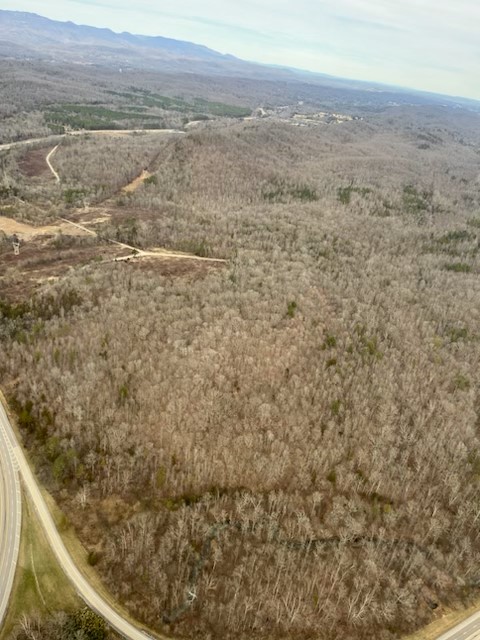
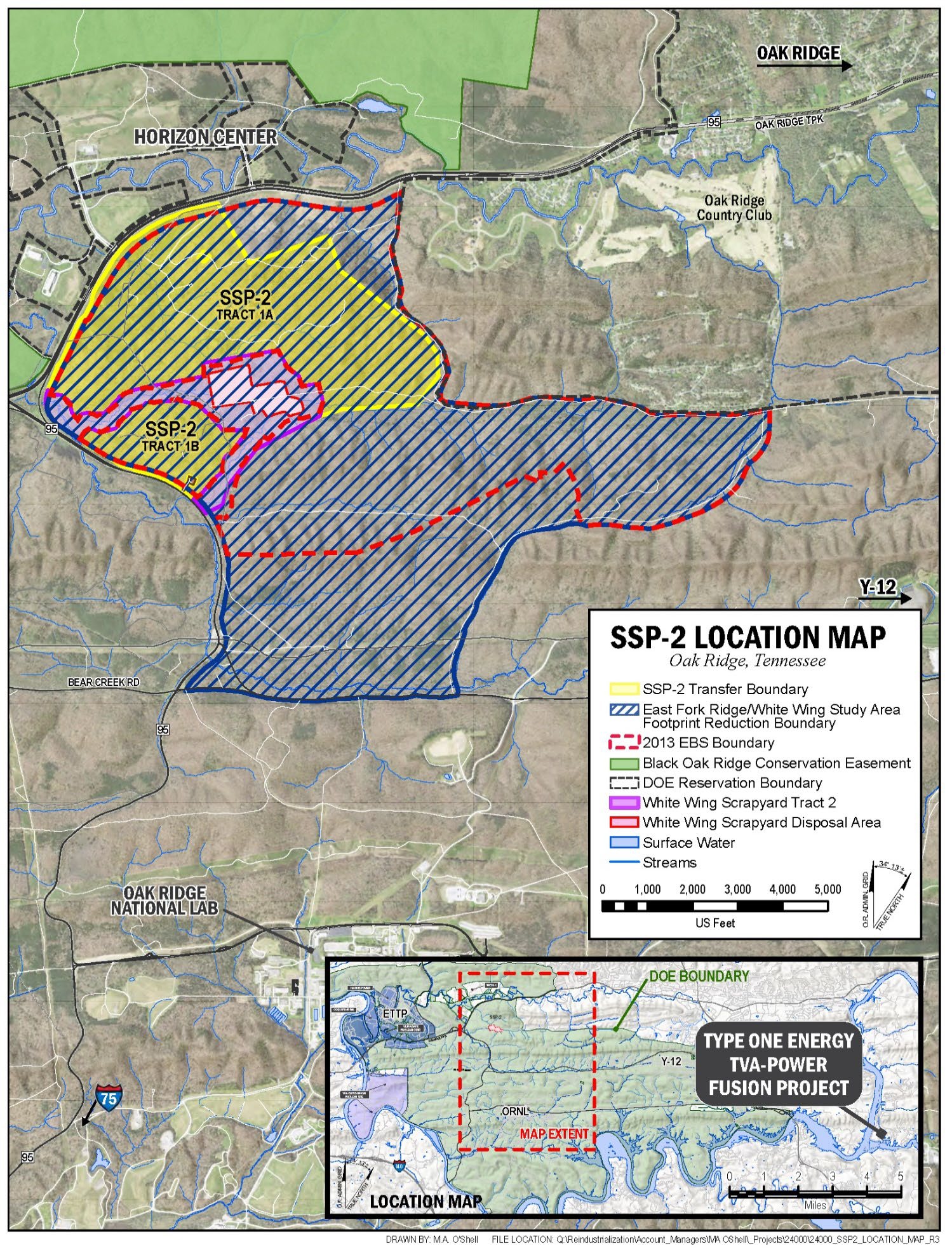
The Project IKE site is in Roane County about seven miles southwest of downtown Oak Ridge, Tennessee, on the east side of the intersection of State Routes 95 and 58. This property was part of the Department of Energy (DOE) Self-Sufficiency Parcel 2 (SSP-2). In the Spring of 2026, 624 acres within SSP-2 were transferred from DOE to the Oak Ridge Industrial Development Board for Orano’s Project IKE site. This land consists of Tracts 1A and 1B within SSP-2 (see the DOE graphic, below). Prior to government ownership, some of the property was forested and other sections were farmland with a few residences that had been abandoned long ago. The remainder of SSP-2, including the DOE White Wing Scrapyard, was not part of the transfer.
Is there any contaminated land on the site?
Prior to DOE's land transfer of SSP-2 to the Oak Ridge Industrial Development Board, DOE confirmed that Tracts 1A and 1B received a “clean parcel determination” (CPD). To receive the CPD, a documented investigation was conducted of the site to fulfill Comprehensive Environmental Response, Compensation, and Liability Act (CERCLA) requirements, including environmental sampling data and historical document examinations. The U.S. Environmental Protection Agency (EPA) and the Tennessee Department of Environment and Conservation (TDEC) reviewed and concurred with the investigation. A summary of the investigation provided as the Environmental Baseline Survey was in the Project IKE license submission.
Why did Orano choose a greenfield site rather than available brownfield areas?
A greenfield site is property that has not been used for industrial purposes. To ensure that Project IKE can construct its facility and begin producing a significant nuclear fuel supply on the same accelerated timeline as new U.S. nuclear energy, Orano selected greenfield property to avoid normal brownfield complexities. These complexities could include the discovery of unexpected environmental or legal concerns created by previous landowners that could create delays in construction. Resolving legacy brownfield issues can include environmental remediation of site contamination, land use restrictions, and additional regulatory requirements.
How much of the site will be used for Project IKE, and how much will remain undisturbed?
Of the 624 acres, about 150 acres are estimated to be developed for Project IKE operations, including the building footprint, cylinder storage area, parking lots, access roads, water retention ponds, and security infrastructure.
Will old-growth forest be affected?
No, the portion of SSP-2 with old-growth forest was not part of the transfer for Project IKE.
Will construction affect any streams or wetlands on the site?
Yes, impacts to three small wetlands and two small streams are unavoidable during construction. Orano has proactively engaged in an extensive permitting process to reduce and mitigate impacts by working with hydrologists, geologists, and biologists to study the site as part of its planning for site preparations and construction. The information collected is included in its permit applications to the U.S. Army Corps of Engineers and TDEC. Orano has also purchased recommended licensed stream bank credits to support restoration efforts elsewhere and to mitigate the project’s net effects to the environment.
Water, Air, Wildlife
Where will the facility’s water come from?
The facility will obtain its water from the City of Oak Ridge’s public water distribution system. Since gas centrifuge enrichment is primarily a dry, mechanical process, most of the water will be used for facility cooling systems and office functions like restrooms and drinking water. The facility will not use groundwater.
Will operations affect the Clinch River, Poplar Creek, or other nearby waterways?
Facility operations will not affect regional waterways, and any liquid process waste will be managed on the site in accordance with federal, state, and local regulatory requirements. Sanitary wastewater will be routed to the City of Oak Ridge’s water treatment works. The site and facility are designed to collect and manage stormwater in a detention basin engineered to meet EPA and TDEC standards. To confirm compliance with National Pollutant Discharge System requirements, the facility’s environmental monitoring program will include routine sampling of groundwater from site monitoring wells and monitoring surface water quality at natural drainage points around the site.
What air emissions will the facility produce during operations?
The facility will operate in compliance with an EPA and TDEC issued air permit, and any process emissions are projected to be well below regulatory emission thresholds. During normal operations, the primary potential emission sources for hazardous air pollutants (HAPs) are four 2,500-kilowatt standby diesel generators used only during power outages or testing. Construction-phase emissions from diesel equipment and dust are projected to be below applicable federal and state ambient air quality standards.
Is there any risk of a UF6 gas release, and what is the emergency plan?
The Project IKE facility will have multiple layers of protection preventing a uranium hexafluoride (UF6) release. An NRC-required Emergency Plan will be in place that ensures emergency planning preparation, coordination, and training with local emergency response organizations. UF6 is the gas used to carry uranium through the enrichment centrifuges. During Orano’s 15 years of ongoing operations at its centrifuge uranium enrichment facility in France and prior operations at its gaseous diffusion plant from 1979 to 2012, its technology, processes, and training program have ensured no hazardous release of UF6. As part of Orano’s Project IKE license application for this similar enrichment facility, UF6 release scenarios, credible accident scenarios, and required safety systems are addressed in the Integrated Safety Analysis (ISA). UF6 is chemically reactive if released and exposed to moisture in the air and would form hydrogen fluoride (a highly corrosive gas) and uranium-containing particles. This chemical hazard, not radiation, is the primary concern in a UF6 release scenario.
What will happen to wildlife during construction and operations?
As site preparations begin, local wildlife will likely transfer to the many acres of the property that will stay undisturbed and to the surrounding forests. Wildlife travel corridors will remain available. Facility operations should have little impact to wildlife, and noise and artificial lighting will be within regulations and similar to other industrial facilities and highways in the area.
Are there federal- or state-protected bat species that could be affected?
Orano conducted an extensive bat acoustic survey of the site. The survey identified the calls of 15 bat species either on or adjacent to the property, including three federally endangered species: gray bat (not tree-dwelling), Indiana bat (tree-dwelling), and northern long-eared bat (tree-dwelling). Two additional state-listed bat species were detected: little brown bat (tree-dwelling) and tricolored bat (tree-dwelling).
What precautions will Orano take during site work to protect bats?
Orano is committed to being a good land steward, including carefully managing the native ecosystem. To ensure that our site preparations do not affect “pup season” for any resident tree-dwelling bats, Orano is working with the U.S. Fish and Wildlife Service (USFWS) and TDEC to conduct needed tree removal during a time and in a manner designed to minimize the impact to an endangered bat population. Additional accommodations were made with guidance from the regulators so that the “maternity season” of offsite cave-dwelling bats observed in the surrounding area would not be negatively affected during site preparations.
Are there other federal- or state-protected species that could be affected?
The USFWS’s Information for Planning and Consultation (IPaC) tool identified the potential for three federally listed threatened or endangered species other than bats to occur on the site: the Spotfin Chub fish, the Virginia Spiraea shrub, and the White Fringeless orchid. An investigation of the site showed that the facility construction will not impact these three species, and no critical habitat overlaps the site.
Sight, Sound & Traffic
Will the facility be visible from the road?
Forested buffers and terrain will limit views from the Oak Ridge Turnpike and nearby trails. The tallest buildings will be roughly 60 to 65 feet and lower than the surrounding ridgelines.
How much noise could occur during construction and operations?
The facility construction will generate normal noise on the site during the day, and routine construction will not occur at night. Third-party studies and Orano’s experience operating an enrichment facility indicate that noise from operations will be well within noise limits and guidelines. Results from the noise surveys showed that sound from Project IKE operations will not impact public areas or the nearest homes located more than a mile away on the other side of a forested ridge.
How many daily truck shipments will there be?
At the height of construction, about 50 trucks a day may be in and out of the site. During operations, about 8 trucks a day for all aspects of the facility’s functions are projected to enter or leave the facility.
Radiation & Waste
Is there any radiation exposure to the public from facility operations?
As part of its license submission requirements, Orano performed detailed radiation dose modeling. The average American receives an annual dose of about 620 millirem per year from all natural and man-made radiation sources combined, such as cosmic rays, radon in homes, medical X-rays, and so on. An important aspect of dosage is that it decreases with more distance from the radiation source. The NRC’s dose limit for the public from a licensed facility is 25 millirem/yr. The maximum calculated potential dose for a representative person living year-round at the facility’s fenceline is 16.5 mrem/yr. For the nearest actual residence (1.19 miles away), any dose is essentially undetectable at less than 0.0001 mrem/yr.
How will environmental radiation monitoring protect the public once the facility is operating?
Project IKE has a comprehensive Radiological Environmental Monitoring Program (REMP) as part of its NRC license. This includes air monitoring for radionuclides using air samplers at and near the site boundary, groundwater monitoring wells installed at the site, surface water and sediment sampling, and periodic milk and vegetation sampling within 50 miles of the facility to detect any food-chain pathway impacts. Radiation dose at the site boundary will also be monitored. Monitoring results are reported to the NRC and made publicly available in an Annual Site Environmental Report.
What are the primary waste streams from an enrichment facility?
The facility will generate four categories of waste: (1) non-radioactive solid waste from industrial processes; (2) radioactive and mixed solid waste from the enrichment process, including DUF6; (3) liquid effluents with managed evaporation onsite; and (4) filtered gaseous effluents.
What happens to the depleted uranium hexafluoride (DUF6), the main byproduct?
Uranium with a concentration of the U-235 isotope below that of natural uranium (0.7%) is called depleted uranium. As the desired enriched uranium is being processed through the centrifuges for increased levels of U-235, depleted uranium hexafluoride (DUF6) is the principal byproduct and will be stored onsite in 14-ton steel cylinders meeting industry standards for handling and storage. As conditions of its NRC license, Orano will have a DUF6 management plan and an NRC-approved decommissioning funding plan.
Will radioactive waste be permanently disposed of at the site?
No, radioactive waste generated at the facility will be packaged and shipped offsite in secure containers to licensed radioactive waste disposal facilities.
Electricity Rates
Where will the electricity come from, and will it affect residents’ electricity rates?
Electricity for the facility will be supplied by the Tennessee Valley Authority through an existing transmission line connected to a new substation on the site. Large industrial facilities, like Project IKE, buy power at negotiated industrial rates that do not affect residential customers’ electricity bills.
Decommissioning
What financial assurance does Orano provide to ensure site cleanup at the end of the facility’s operation?
NRC regulations require uranium enrichment licensees to set aside funds to cover the cost of dismantling, removing contaminated equipment, and restoring the site, even if the company ceases operations. This financial assurance must be provided prior to possession of UF6 and operation of the enrichment facility.
Additional Information
Is Oak Ridge National Lab involved in this project?
No, ORNL is not directly involved with our project.
Is TVA involved in this project?
No, TVA is not directly involved with our project, though access to its steady power supply was a significant factor in the siting decision and utilities would be customers of this facility's production.
Is this project part of the NNSA’s DEUCE program?
No, the Orano facility is not part of the NNSA’s Domestic Uranium Enrichment Centrifuge Experiment (DUECE) program for U.S. national security needs, developed and managed by Oak Ridge National Laboratory (ORNL) to advance uranium enrichment expertise and technology. Project IKE will enrich uranium for commercial nuclear energy reactors and will not be licensed for producing the higher levels of enrichment needed for national security purposes.
Resources
Orano's Oak Ridge office: 151 Lafayette Dr, Oak Ridge, TN 37830
Video: Orano's Project IKE 2025
https://youtu.be/BjXhK57yXl4
Podcast: New Orano Plant Boosts Nuclear Growth. Gone Fission interview with Orano USA CEO Palayer, 12/10/2024
https://youtu.be/TvVFa1IypSE
Orano Enrichment & Processing
https://www.orano.group/en/nuclear-expertise/from-exploration-to-recycling/international-expert-in-uranium-processing
Online Interactive Immersion Tour of Orano's Tricastin Enrichment Facility
https://www.orano.group/visite-tricastin
NRC – Uranium Enrichment
https://www.nrc.gov/materials/fuel-cycle-fac/ur-enrichment.html
News
Media contact: Curtis Roberts, Press Officer, curtis.roberts(at)orano.group
5/21/2026 - Orano Advances Project IKE with NRC Acceptance for Review of Uranium Enrichment License Application
3/27/2026 - Oak Ridge IDB Signs Development Agreement with Orano for "Project IKE"
3/09/2026 - DOE Completes Largest Land Transfer Yet in Oak Ridge, Spurring New Economic Growth
6/11/2025 - Fox News Asher Redd interview with Orano USA CEO Palayer: Trump's nuclear strategy takes shape as former Manhattan Project site powers up for AI race against China
12/11/2024 - Orano Awarded DOE LEU Enrichment Contract
11/22/2024 - Orano Begins Hiring for Project Ike Enrichment Facility in Tennessee
10/17/2024 - Orano Awarded DOE HALEU Enrichment Contract
10/08/2024 - Orano Proposal Accepted by DOE for HALEU Deconversion Contract Award
9/04/2024 - Governor Lee, Commissioner McWhorter Announce Orano USA Seeks to Locate Uranium Enrichment Operations in Oak Ridge, TN Economic & Community Development
10/26/2023 - Orano Announces 30% Increase in Uranium Enrichment Capacity by 2028
Job Openings
#OranoHires
Along with these open positions for developing our Project IKE enrichment facility, keep an eye on our Careers page and on LinkedIn as we continue seeking qualified candidates for jobs in Oak Ridge, TN.
With more than 300 jobs associated with Project IKE, we have many more jobs to fill!
Click the link to open the job description.
- Electrical I&C Engineer
- VP of Engineering
- Fire Safety Engineer
- Global Mobility Specialist
- HVAC Engineer
- Insurance & Risk Manager
- Tax Manager